Skip to content

Drywall Service

Drywall Texture Matching

Texture is where repairs and additions either blend in or stick out. We read your pattern, reproduce it, and feather the edges so new work disappears into the old.

Texture Matching

Textures We Match & Apply

  • Knockdown — the most common Colorado wall and ceiling texture
  • Orange peel — fine to heavy spray textures
  • Hand-textures & skip-trowel — troweled, brushed, and custom finishes
  • Smooth / Level 5 — flat finishes for modern interiors and accent walls
  • Ceiling textures — including matching after popcorn removal
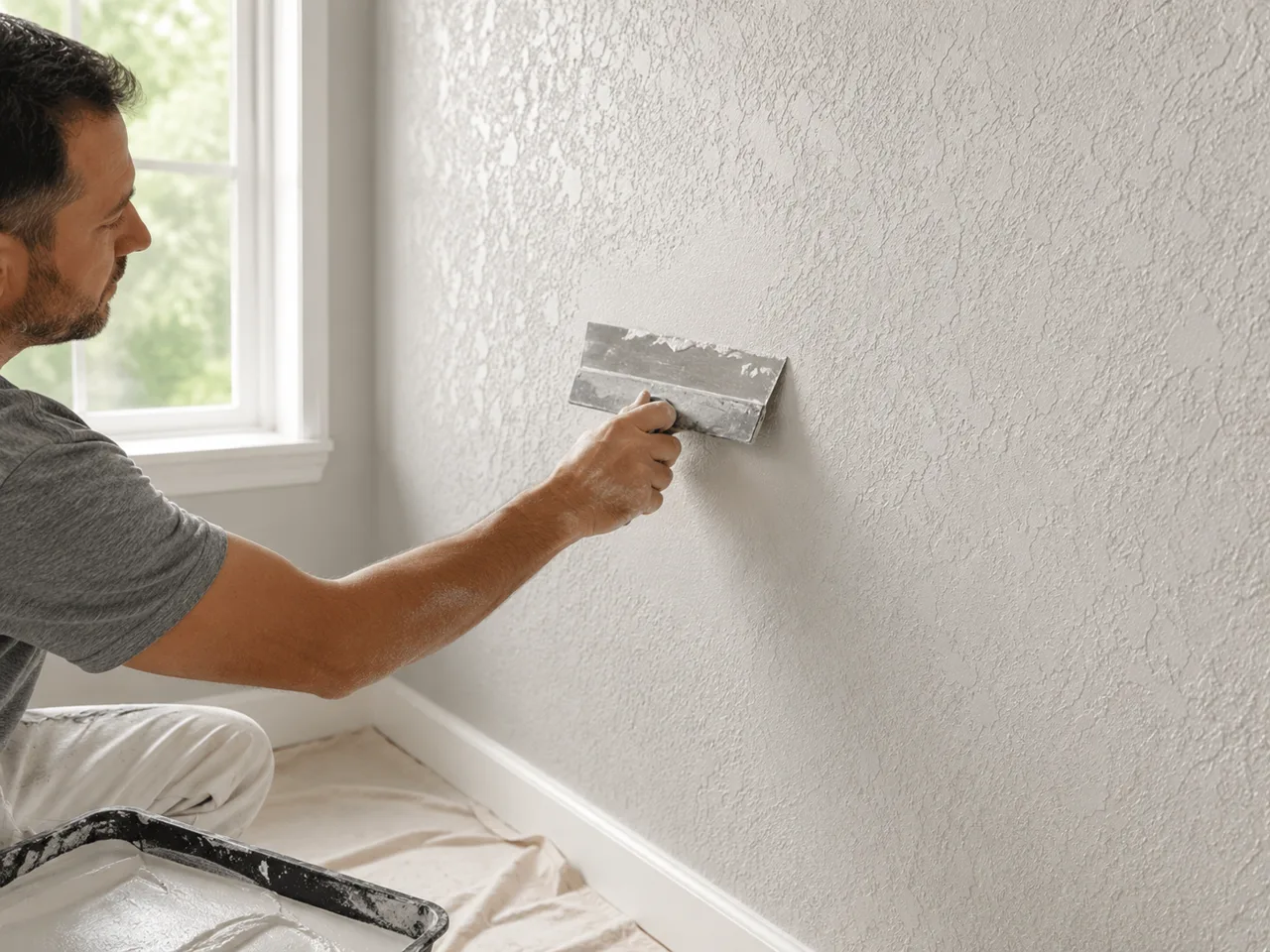
Drywall finisher drawing a wide knife across a wall to work a knockdown texture that matches the surrounding finish

Texture Matching

Our Texture-Matching Process

  1. Read the existing pattern — We study the surrounding texture up close — the size of the splatter, how tight the knockdown is, the direction of any trowel work — so we know exactly what we're reproducing.
  2. Mix and tune — Compound is thinned to the right consistency for the pattern; too thick or too thin and even the right technique reads wrong.
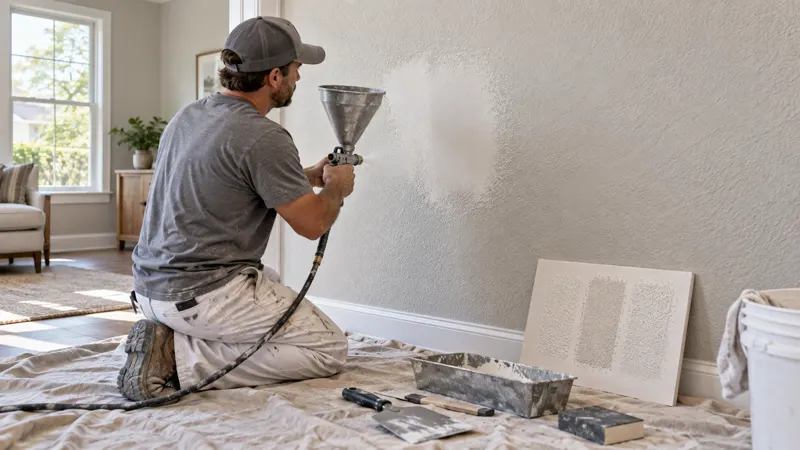
  3. Test on a board — We spray and finish a test area or sample board first, adjusting spray pressure, tip size, and knockdown timing until it matches — before anything touches your wall.
  4. Apply and time it — The texture is sprayed or hand-applied to the repair, then — for knockdown — left to flash before it's knocked down at the right moment; timing is what separates a match from a smear.
  5. Feather and blend — Edges are feathered into the existing texture and carried to a natural stopping point so there's no hard seam between old and new.
  6. Prime and hand off to paint — Once it's dry, we prime the new texture; painting it to blend — through our sister team when you want it — is what makes the repair truly disappear.

Texture Matching

Why Texture Matching Is Hard (And Why We're Good At It)

Two walls with “knockdown” can look completely different depending on spray pressure, knockdown timing, and mud mix. We read the existing pattern and reproduce it — then feather the edges so there's no visible seam between old and new.

Texture Matching

A Closer Look at the Textures We Match

Each texture is made a different way, and matching one means reproducing the technique, not just the look. Here's what goes into the finishes we see most across the Front Range.

  • Knockdown — compound is sprayed on in a splatter, left to flash, then flattened with a wide knife for that mottled, low-profile look; the region's most common wall and ceiling texture.
  • Orange peel — a finer spray with no knockdown, leaving a subtle bumpy surface; ranges from light to heavy depending on spray and mix.
  • Skip-trowel — compound hand-applied with a trowel that skips across the surface, leaving soft, rounded high spots; a hand skill that's easy to spot when it's done poorly.
  • Smooth / Level 5 — a skim-coated flat surface with no texture at all; unforgiving, so it takes the most careful finishing and sanding.
  • Popcorn / acoustic — an older sprayed ceiling texture; we more often remove it than match it, but we can patch it when needed.

Texture Matching

The Paint Advantage

Even a perfect texture match can show if the repaint is off. Because we can prime and paint through Wild Fox Painting, we control the finish end-to-end for a truly invisible result.

Drywall + Paint. Coordinated.

Patches that disappear, not patches you live with.

Most drywall jobs end at the wall — we finish the job by texturing, priming, and repainting through Wild Fox Painting . Two specialty teams, one coordinated handoff — no visible patch. One estimate, one schedule, one point of contact.

FAQ

Common questions about texture matching.

Knockdown, orange peel, hand-texture and skip-trowel, and smooth (Level 5) finishes — on both walls and ceilings.

We study the existing pattern, then dial in the spray and knockdown technique on a test area before touching your wall — so the new texture reads as part of the original, not a patch.

A mismatched patch often stands out more than the damage it replaced. Matching the texture — and then painting to blend — is what makes a repair or addition truly disappear.

Yes, ceilings included. Ceilings catch raking light, so a careful match matters even more there — it's one of our specialties.

Yes. Hand and skip-trowel finishes are the hardest to reproduce because they carry the original applicator's rhythm — so we test on a sample board and dial in the trowel work until it disappears into the surrounding wall.

Whatever gives the most invisible result. Where we can, we feather the new texture to a natural break — a corner, a seam, an edge — so the eye never catches a transition. On a small, open wall it's sometimes cleaner to re-texture the full surface.

Texture needs to dry fully before primer and paint — usually not the same day. Rushing it traps moisture and dulls the match, so we build the drying time into the schedule.

Yes. Ceilings and walls often carry different textures, and ceilings show every flaw under raking light, so we match each surface to its own pattern rather than forcing one texture across both.

Planning a project? Let's talk.

Free, no-pressure estimate. Call, text, or send a few photos.

Call Get Estimate