Skip to content

Drywall Service

Drywall Repair & Patching

A good drywall repair is one you can't find afterward. We fix holes, cracks, and damage of every size — then match the texture and repaint so the patch disappears into the wall.

Drywall Repair & Patching

Common Drywall Repairs We Handle

  • Holes — from doorknobs and furniture to large impact damage
  • Cracks — stress and settling cracks at corners, seams, and over doors and windows
  • Water damage — from leaks, burst pipes, ice dams, and overflows (repaired after the source is fixed)
  • Nail pops and seam failures
  • Ceiling repairs — including water stains and sagging
  • Dings & dents — the small stuff: scuffs, dents, anchor holes, and move-out touch-ups
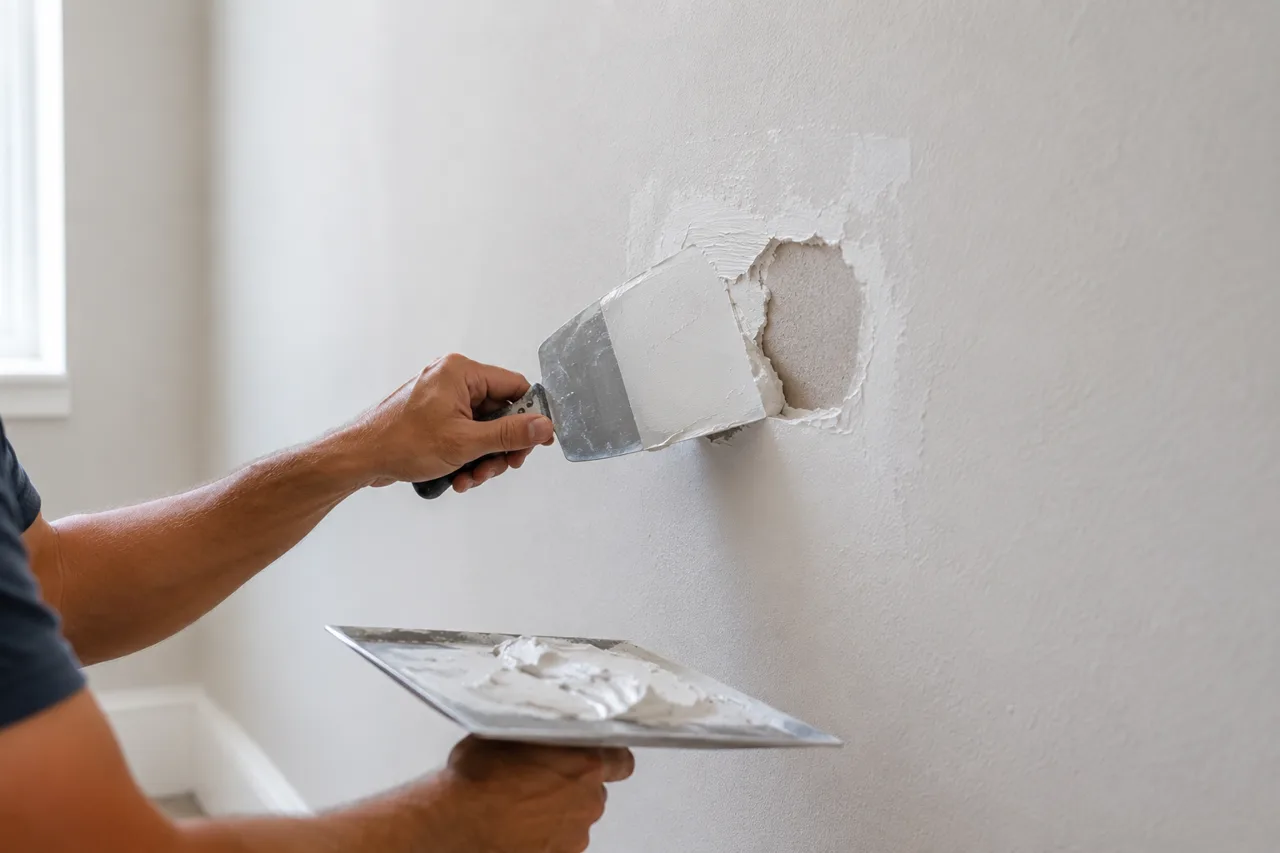
Close-up of a taping knife spreading joint compound over a hole cut into a wall, with a loaded hawk below

Drywall Repair & Patching

Our Repair Process

  1. Assessment — We identify the damage and, where relevant, flag the underlying cause.
  2. Repair — Cut out, back, patch, and refasten as the damage requires.
  3. Finish & texture match — Taped, mudded, sanded, and textured to match the existing wall.
  4. Paint to blend — Primed and repainted so the repair disappears (optional, via our paint team).
  5. Cleanup — HEPA-filtered, dust-minimizing, and tidy.

Drywall Repair & Patching

How We Match the Repair Method to the Damage

A dime-sized dent and a foot-wide hole don't get the same fix. Using the right method for the size and location is what makes a repair hold and disappear instead of cracking back through in a season.

  • Dents, dings, and anchor holes — filled with compound, sanded flush, and textured to match.
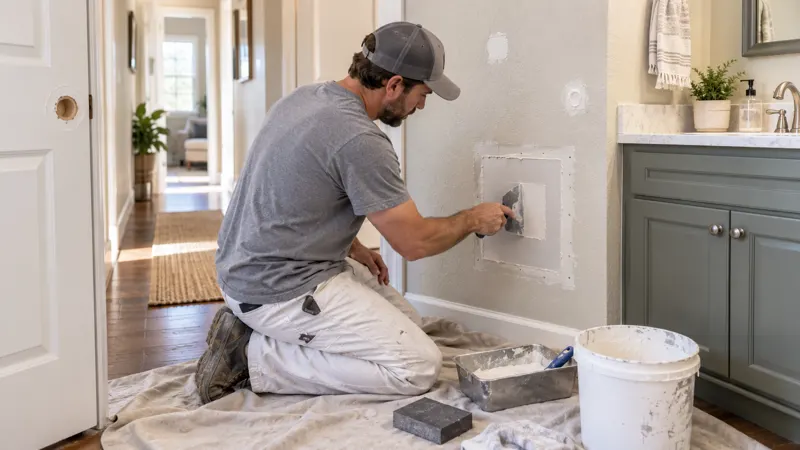
  • Door-knob and small holes — a backed patch or a self-adhesive patch set into compound, then feathered out wide.
  • Large or impact holes — cut back to a clean square, backed and fastened to solid framing or blocking, then taped, mudded, and blended.
  • Cracks — raked out and taped over so they don't reopen, then feathered; a skim of compound over an untaped crack almost always cracks again.
  • Nail and screw pops — the popped fastener is reset or removed, re-secured into the framing, then covered and finished flush.
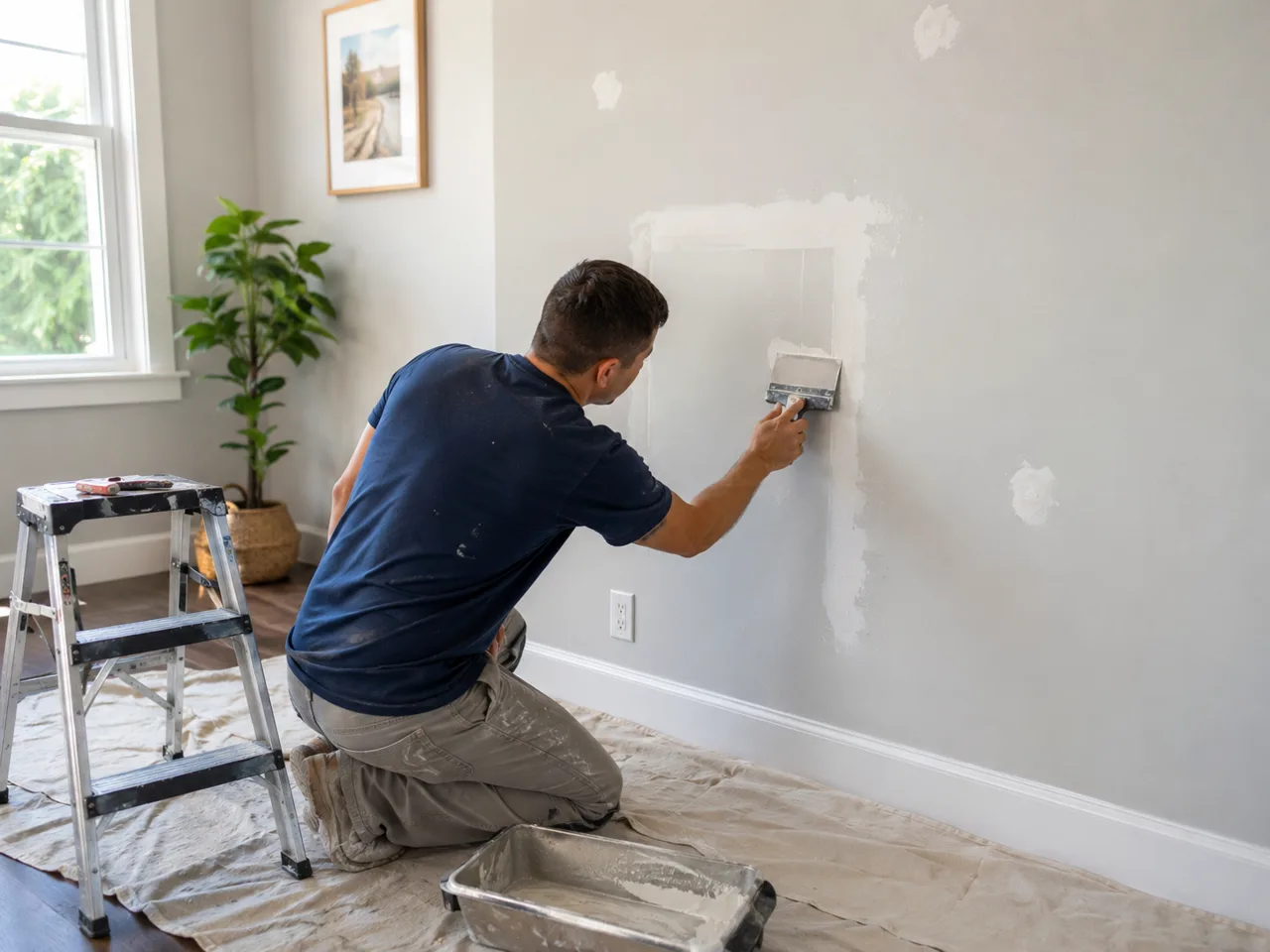
Drywall finisher kneeling on a drop cloth, skimming compound across a patched section of living-room wall

Drywall Repair & Patching

Why Cracks and Nail Pops Keep Coming Back

Drywall moves with the house. Across the Front Range, seasonal humidity swings, framing that dries and shifts, and settling over expansive clay soils all pull at the same weak points — the corners of doors and windows, long ceiling seams, and fastener lines. When a crack keeps returning, the original joint usually wasn't taped or fastened to handle that movement.

  • Seasonal movement — dry Colorado winters and more humid summers expand and contract framing, stressing joints.
  • Settling — homes settle over time, and expansive soils common across the region add to it.
  • Truss uplift — ceiling-to-wall cracks that open in winter and close in summer as roof trusses move.
  • Under-fastened or untaped joints — the most common reason a patch fails; we tape and refasten so the repair moves with the wall instead of splitting.

Important Note

A Note on Water Damage

If your damage is from an active leak or flood, the moisture source should be fixed first. We're glad to coordinate timing so your repair is done right and won't trap moisture behind the wall.

Drywall + Paint. Coordinated.

Patches that disappear, not patches you live with.

Most drywall jobs end at the wall — we finish the job by texturing, priming, and repainting through Wild Fox Painting . Two specialty teams, one coordinated handoff — no visible patch. One estimate, one schedule, one point of contact.

FAQ

Common questions about drywall repair & patching.

Holes, cracks, settling cracks, water damage, popped nails and screws, door-knob dents, and failed past patches — on both walls and ceilings. If we spot an underlying cause, we'll flag it so the fix actually lasts.

No — that's the whole point. We cut out and back the damage, patch and refasten, then tape, mud, sand, and match the surrounding texture. Primed and repainted to blend, the repair disappears into the wall.

Yes, once the water source is addressed — an active leak should be repaired first so moisture isn't sealed behind new board. Then we remove the damaged drywall, replace it, texture, and (with our paint team) repaint so the damage is gone.

Many small repairs are done in a single visit. Because texture and paint need drying time between steps, a fully blended, repainted repair may span a day or two. We'll give you a clear timeline up front.

Almost always because the joint underneath was never taped, or the drywall wasn't fastened to handle the way a house moves with the seasons. We rake the crack out, tape it so it can flex, and feather the compound wide — so the fix moves with the wall instead of splitting again.

Any size. Small holes get a backed patch feathered out; large or impact holes are cut back to a clean edge, backed and fastened to solid framing, then taped, mudded, textured, and blended. When damage covers most of a panel, we replace the whole sheet.

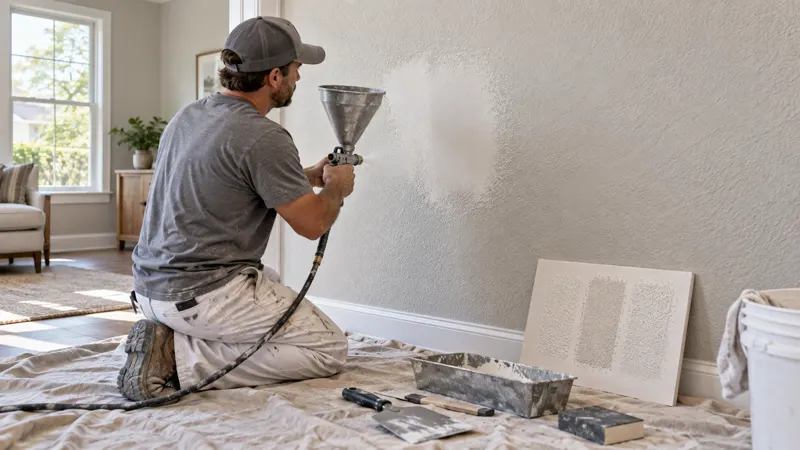
Yes — texture matching is one of our specialties. We read your existing knockdown, orange peel, or hand texture and reproduce it on the patch, feathering to a natural break so there's no visible edge.

Either. We can leave it primed and paint-ready, or our sister painting team can prime and repaint so the patch disappears completely — two specialty teams, one coordinated handoff, one point of contact.

Planning a project? Let's talk.

Free, no-pressure estimate. Call, text, or send a few photos.

Call Get Estimate