Every drywall company gets the same phone calls, and a lot of them don't return the small ones. The doorknob that went through the hallway wall. The eight-inch square a plumber cut out under the sink to reach a shutoff valve and left for "someone else." One nail pop in the master bedroom that's been bugging you for a year.
We take those calls. A small repair is priced as its own small job rather than turned away or padded into something bigger, and it's finished the same way a large one is, which is to say you shouldn't be able to find it afterward. Here's how the common ones actually get done.
The doorknob hole
A doorknob leaves a hole roughly the size of a fist, usually with the paper face torn and pushed into the wall cavity. It's too big to fill with compound alone; there's nothing behind it for the compound to hold onto.
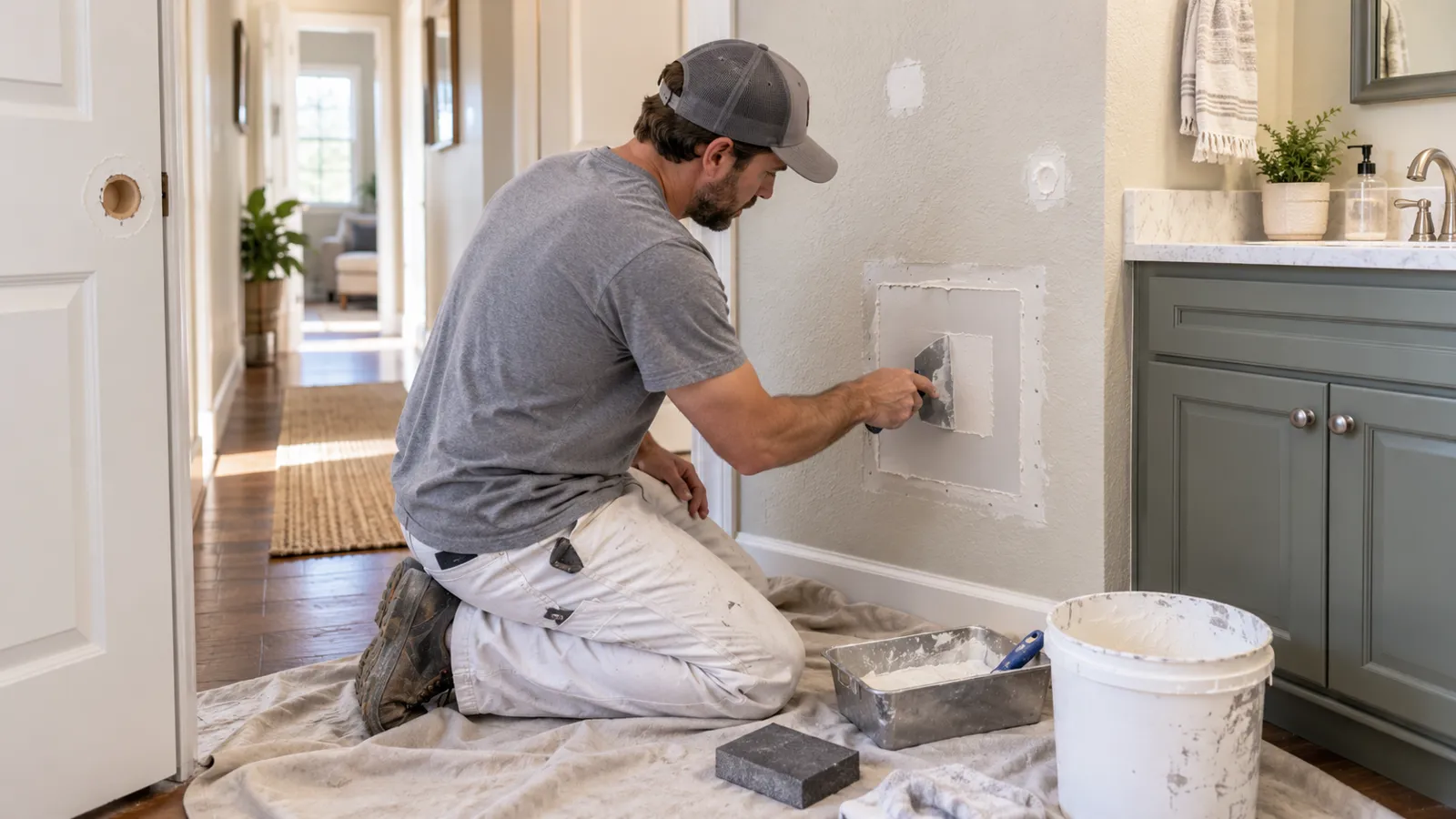
The fix is a backed patch. The ragged hole is squared up with a knife, a strip of wood or a scrap of drywall is slipped into the cavity and screwed to the back of the existing board to act as backing, and a new piece of drywall is cut to fit and screwed to that backing. The seams are taped, three coats of compound go on and are feathered out wide, and the texture is rebuilt to match the wall.
It's a two-visit repair because of drying time between coats: one visit to patch and get the first coats on, a shorter one to finish, sand and texture. Then it's ready for paint.
The plumber's access cut
Trades cut holes in drywall for a reason: they needed to reach a valve, a drain, a wire. Cutting is their job; closing it up isn't, and most leave the piece they cut out leaning against the wall.
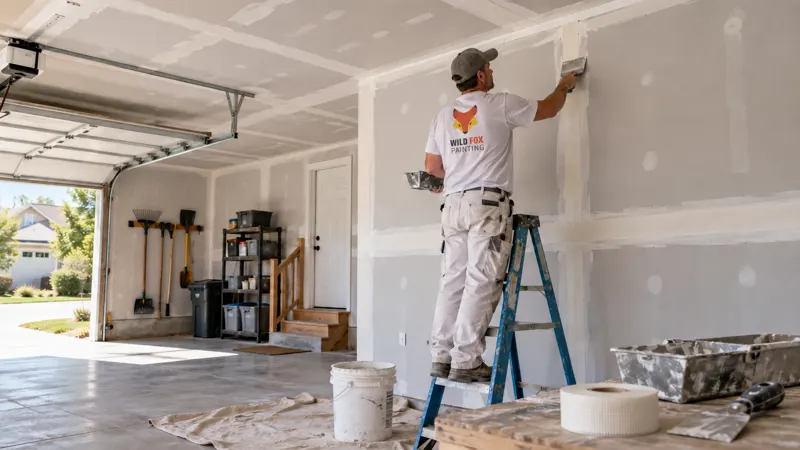
If the cutout is in one piece and the edges are clean, it can often go back in. Backing strips go on either side of the opening inside the wall, the original piece is screwed to them, and the seams around it are taped and finished like any other joint. If the piece is broken or the cut is ragged, a new piece is fitted the same way.
The one thing we'll check first: if the access was for a leak, is the leak actually fixed and the cavity dry? Closing a wall on wet framing just means opening it again.
Cracks over doors and windows
A hairline crack running from the corner of a door frame isn't a hole, but it's not a fill-and-paint job either. Compound alone has no strength across a gap, and a crack that's just been skimmed over will split along the same line the next time the framing moves with the season.
The crack is raked open, refastened if the board has worked loose, taped with paper tape set in compound, and feathered out in three coats. That's what makes it stay closed. It's a small repair that takes longer than it looks, because of the tape and the dry time between coats, and it's worth doing right once.
Nail pops
A nail pop is a fastener that's pushed a small dome of compound off the wall, usually because the framing behind it dried and shrank after the house was built. Pressing new compound over it doesn't help; the fastener is still there and will push through again.
The popped nail or screw is driven back in or removed, a new screw goes in an inch or so away into solid framing, the dimple is filled and feathered, and the spot is textured. Five minutes each, and they don't come back. If you have a handful of them, we'll do them all in one visit.
Dings, dents and anchor holes
Move-out touch-ups, the dent from the sofa arm, the constellation of drywall-anchor holes where a shelf used to be. These are the genuinely small ones: filled, sanded flush, textured to match. We'll bundle a room's worth into one stop.
The hard part is never the patch
On every one of these, the patch itself is straightforward. What separates a repair you can find from one you can't is the texture and the paint.
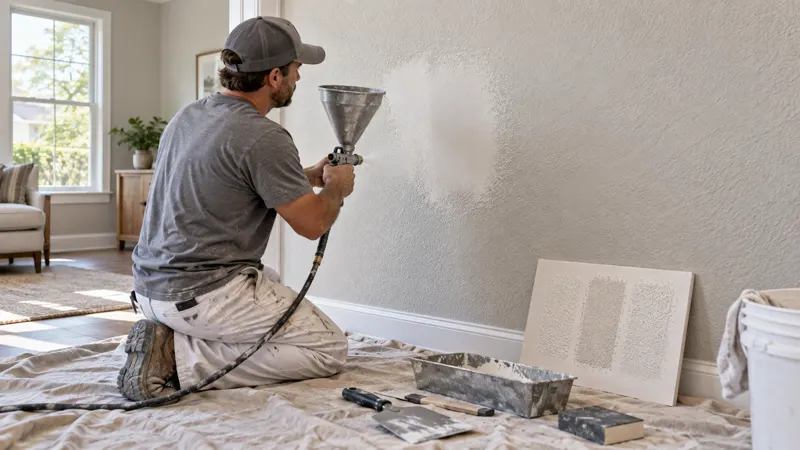
Most walls in this region carry knockdown or orange peel, and the texture on the repair has to match the pattern around it in spatter size and how it was knocked down. We tune the mix and spray on a test board before it goes on your wall, then feather it out past the patch so there's no border. Then the repair needs primer and a repaint that matches the wall in sheen as well as color; a spot of fresh paint on an old wall almost always flashes. Our sister team at Wild Fox Painting handles that side when you want it, with one estimate and one point of contact across both teams.
How to get a quote
Text or email us a photo of the damage and a second photo from a few feet back showing the surrounding wall, so we can see the texture. For most small repairs that's enough to quote from, and you'll have a written price within 24 hours. No visit needed until the day of the repair.
There's no repair too small. If it's bugging you, send it over.