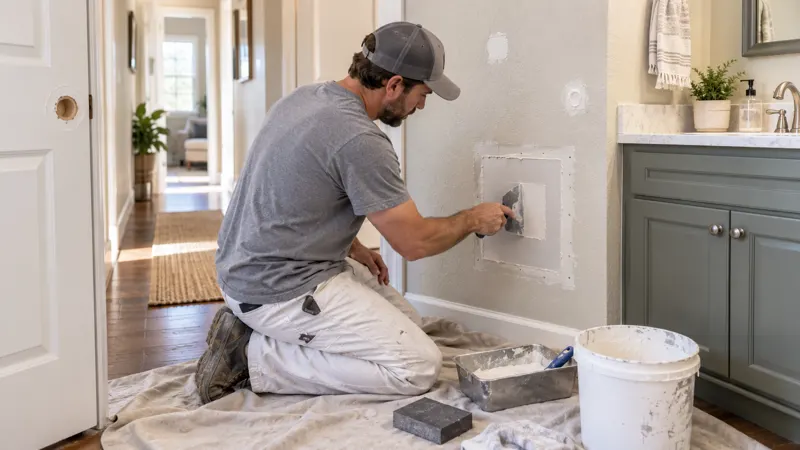
Walk into a room where someone patched a hole last year and you can usually find it in under ten seconds. The patch is flat. The paint matches. But there's a smooth island in a sea of knockdown, or a blob of heavier spatter where the handyman tried to fake it with a spray can.
Texture is where a drywall repair either blends in or announces itself. It's also the part most people underestimate, because "knockdown" sounds like one thing and it isn't.
Every texture is a recipe, not a look
Two walls in the same house can both be called knockdown and look nothing alike. That's because texture comes from a process with several variables, and each one changes the result.
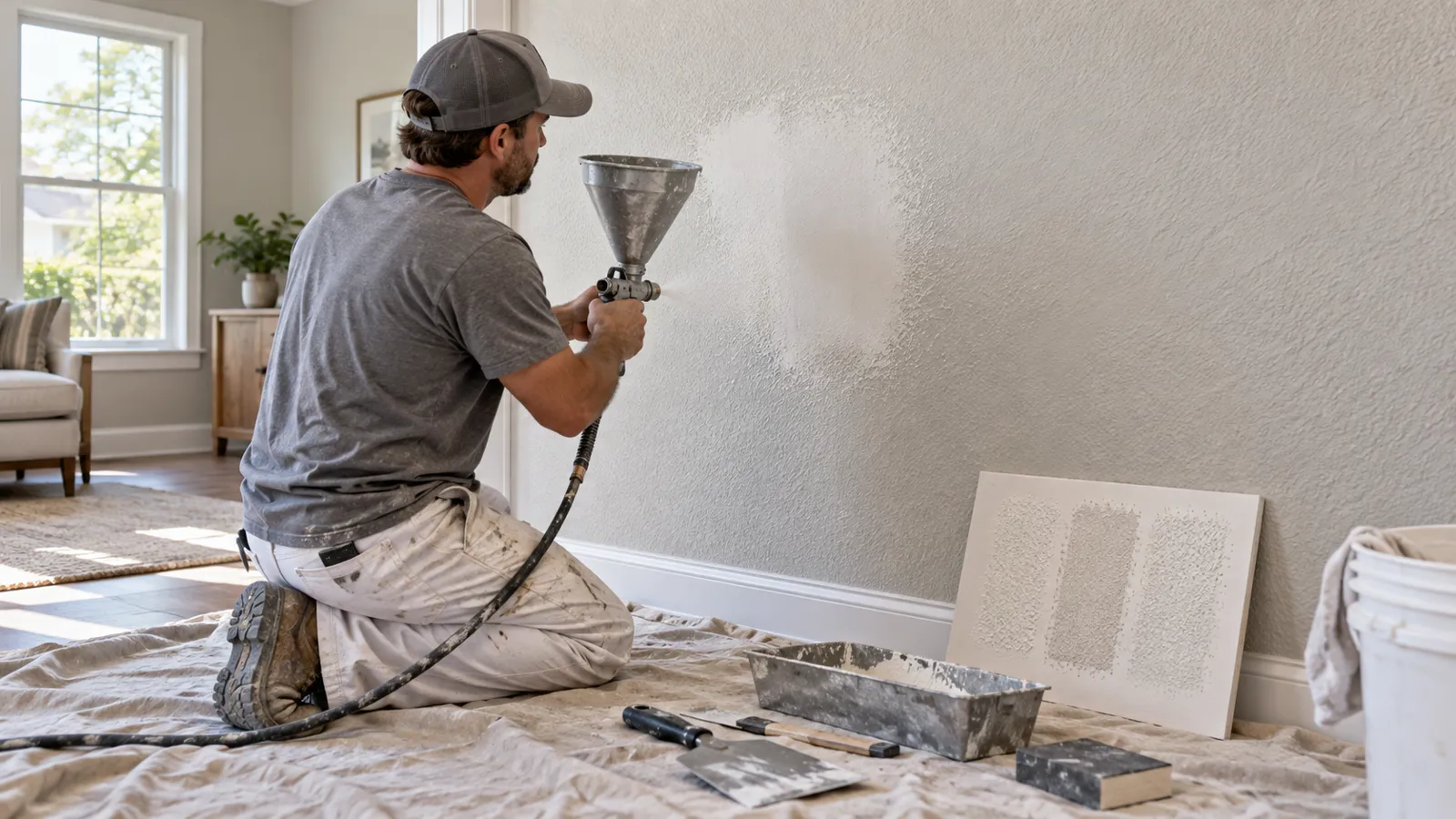
Knockdown starts as joint compound thinned to a specific consistency, sprayed through a hopper or texture gun in a spatter pattern, left to flash for a few minutes, then flattened with a wide knife. The size of the spatter depends on the mud consistency and the spray pressure. How much of it gets flattened, and how soft the edges of each flattened spot look, depends on how long it sat before it was knocked down. A minute early and it smears; a few minutes late and it barely flattens at all.
Orange peel is a finer spatter with no knockdown step. It ranges from a barely-there stipple to a heavy, pebbled surface, and the difference is entirely spray pressure and mud mix.
Skip trowel and hand textures are applied with a knife or trowel that skims across the surface and leaves rounded high spots. These are hand skills. The direction, pressure and rhythm of the person who did it are in the wall, and matching them means reading that pattern before picking up a trowel.
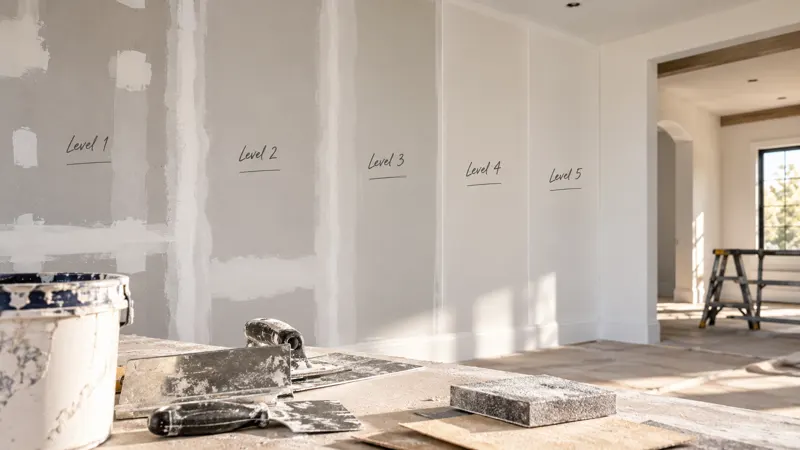
Smooth, or Level 5, is a skim coat over the whole surface with no texture at all. It's the most unforgiving, because there's nothing to hide a ridge or a sanding scratch.
Which is why a can of aerosol texture from the hardware store rarely works. It produces one pattern at one pressure, and the odds that it matches the specific recipe on your wall are low.
Reading the wall before matching it
The first thing we do on a texture job is look at the existing surface up close and in raking light, the low-angle light from a window or a lamp that makes every bump cast a shadow. We're reading the size of the spatter, how tight or loose the knockdown is, whether the pattern is directional, and whether the ceiling carries a different texture than the walls, which it usually does.
Then we mix. Compound is thinned to match, and the mix is adjusted until a test spray on a scrap board or a piece of cardboard looks right. Spray pressure, tip size and knockdown timing are tuned on that test board, not on your wall. Only when the sample matches does the texture go on the repair.
Feathering: the part that hides the seam
Even a perfect texture match will show if it stops in a hard line at the edge of the patch. The fix is to carry the new texture out past the repair and let it thin as it goes, so there's a gradual transition instead of a border.
On ceilings this matters more than anywhere else. Ceilings get lit from the side by windows, and any change in surface reads as a shadow line. A ceiling patch is textured and feathered wider than the same patch on a wall would be, sometimes a few feet in every direction, specifically so it can't be found in afternoon light.
Why paint is the last half of a texture match
Here's the part that catches people out: a texture match can be right and the repair can still show, because the repaint is wrong.
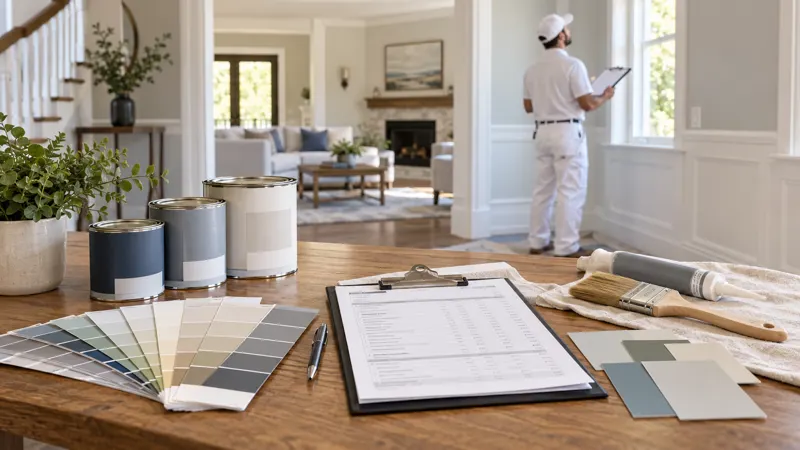
New texture and new compound drink paint differently than a wall that's been painted for years. If the patch gets a coat of the same paint straight from the can, it flashes, showing up as a slightly different sheen even though the color is identical. It needs primer first, then paint that matches the wall in color and sheen, usually applied corner to corner rather than as a spot touch-up.
That's why we hand off to our sister team at Wild Fox Painting when the job calls for it. They prime the new texture and repaint to blend, and because the two teams coordinate, you're not lining up a second contractor to finish what the first one started. One estimate, one schedule, one point of contact.
The jobs where texture matching earns its keep
- Holes from doorknobs, furniture and plumbers. Small patches on textured walls are the most common call we get, and the most commonly botched.
- Water-damage repairs on ceilings. A replaced section of ceiling board has to carry the same texture as the rest, feathered wide.
- Additions and remodels. New drywall meeting old at a doorway or where a wall came out. The new texture has to run into the old without a visible transition.
- After popcorn removal. If the rest of the house is knockdown, the freshly scraped ceiling can be retextured to match so the room doesn't look like it belongs to a different home.
What to expect from us
Every texture job starts with a sample. We don't spray your wall until the test board matches, and you're welcome to look at it first. Repairs are dust-controlled with HEPA-filtered sanding, and every one is covered by our two-year workmanship warranty.
If you've got a patch you can see from across the room, send us a photo of it and of the surrounding wall. We'll tell you what texture you've got, what it'll take to make the repair disappear, and put a written estimate in front of you within 24 hours.